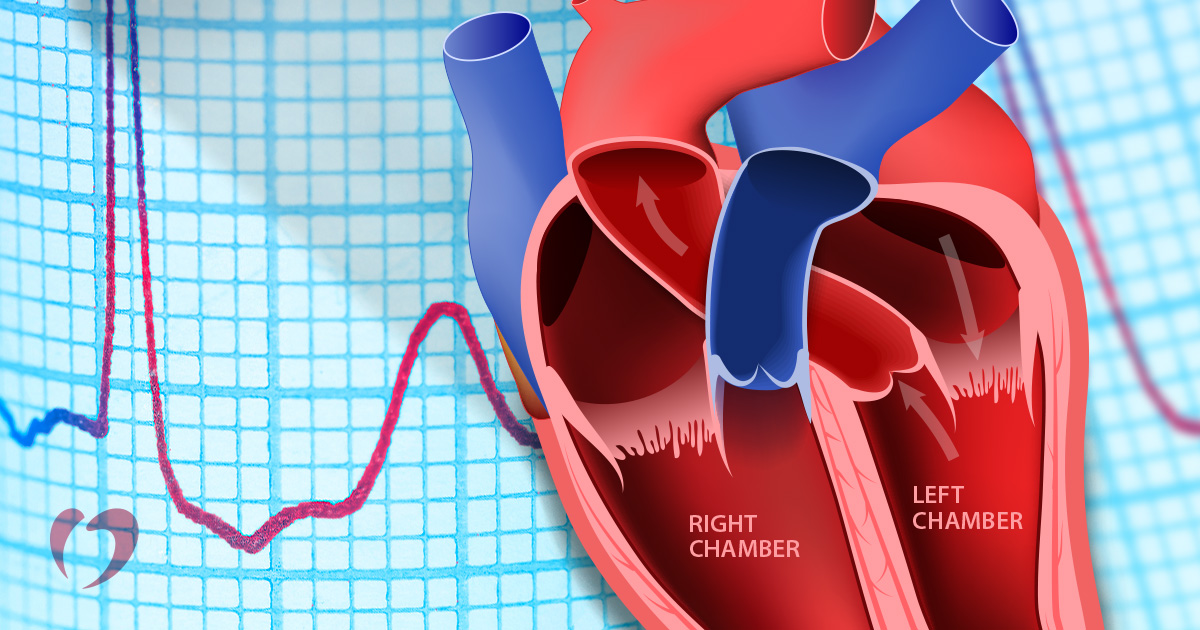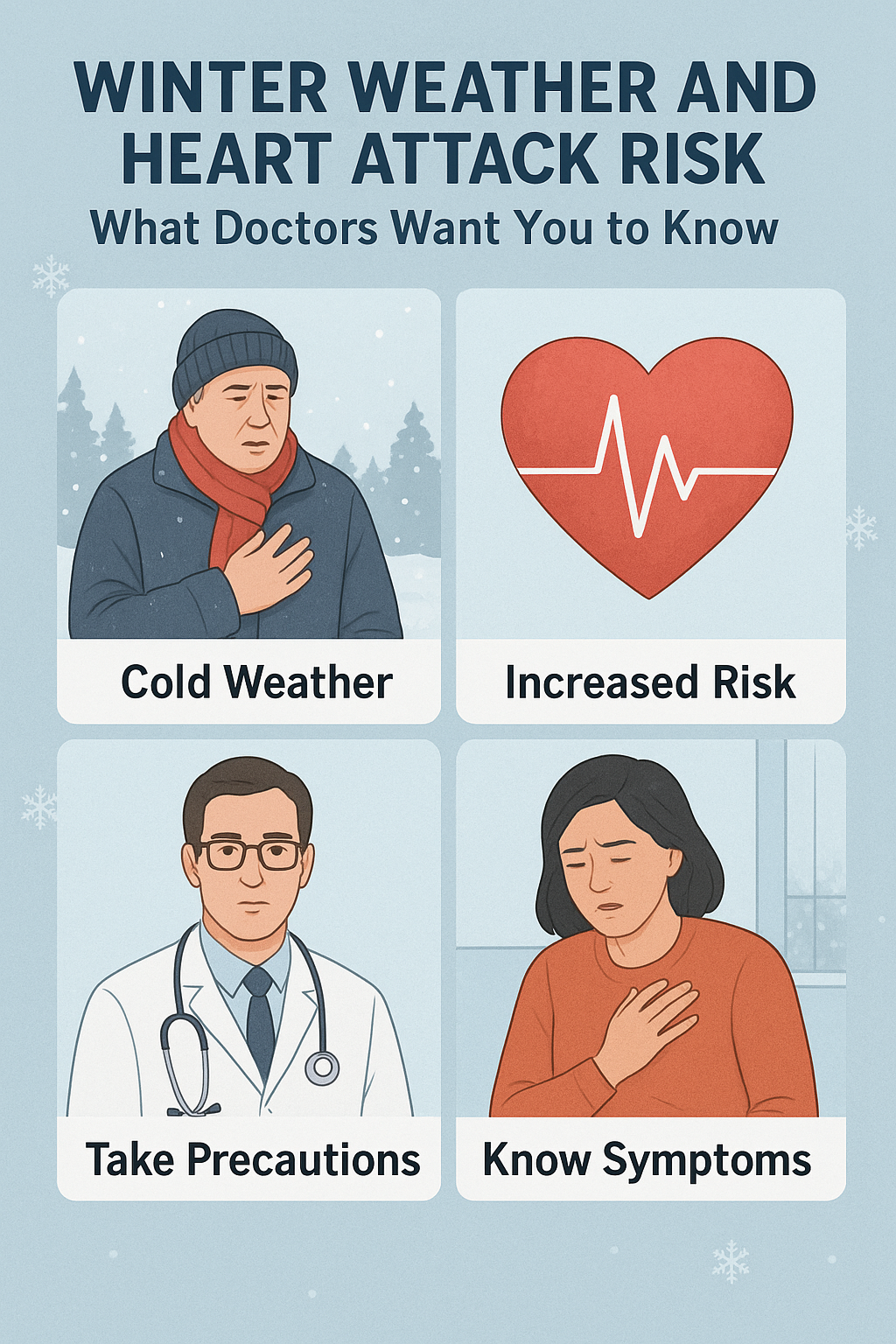
Winter brings cool winds, cozy evenings, and festive moments. But beneath its calm charm, cold weather carries a serious health risk — an increased chance of heart attack. Every year, hospitals across India see a noticeable rise in cardiac emergencies during the winter season. Doctors warn that low temperatures can put additional stress on the heart, especially in people who already have underlying heart conditions.
Understanding how winter affects your heart and knowing when to seek expert help can truly save lives.
Why Does Cold Weather Increase Heart Attack Risk?
When the temperature drops, the body responds by narrowing blood vessels to preserve heat. This natural reaction increases blood pressure and forces the heart to work harder to maintain blood circulation. For healthy individuals, the body usually adapts. However, for people with heart disease, blocked arteries, or high blood pressure, this additional strain may trigger a heart attack.
Some of the most common winter-related causes include:
1. Constriction of blood vessels due to cold
2. Rise in blood pressure levels
3. Thickening of blood due to dehydration
4. Reduced physical activity
5. Increased intake of high-fat and salty foods
6. Higher risk of flu and respiratory infections, which stress the heart
These conditions together make winter a vulnerable time for heart patients.
Who Is Most at Risk?
Doctors have observed that certain groups are more prone to heart attacks during winter:
Patients with a history of heart disease
Individuals suffering from high blood pressure or high cholesterol
Diabetics
Smokers and alcohol consumers
Elderly people, especially above 60 years
Those leading a sedentary lifestyle
People who are overweight or under high stress
If you fall into any of these categories, extra care is crucial during winter months.
Warning Signs You Must Not Ignore
Many people mistake the early signs of a heart attack for simple winter discomfort, gastric issues, or body pain. Doctors urge everyone to take the following symptoms seriously:
Chest pain, heaviness, or pressure
Pain spreading to the left arm, neck, jaw, or back
Shortness of breath
Cold sweating, even in a warm room
Nausea or vomiting
Sudden dizziness or unexplained fatigue
If any of these symptoms occur, especially in cold weather, immediate medical attention is essential.
Traditional and Smart Ways to Protect Your Heart in Winter
By following a disciplined, well-balanced routine — the way our elders have always advised — you can significantly reduce your risk:
Keep yourself warm – Always wear proper winter clothing, especially when going outdoors early in the morning.
Stay active indoors – Simple stretching, light yoga, or walking inside your home helps maintain circulation.
Eat a heart-healthy diet – Include seasonal fruits, vegetables, whole grains, nuts, and warm soups. Avoid excess fried and processed foods.
Hydrate regularly – People often forget to drink enough water in winter.
Manage stress and sleep well – A relaxed mind and sound sleep support heart health.
Monitor blood pressure and sugar levels regularly
Take prescribed medicines on time
Consistent habits, followed with care and routine, have always been the best protection for the heart.
Consult the Best Cardiologist Doctor in Fortis Hospital Shalimar Bagh, Delhi
If you are concerned about your heart health or experiencing symptoms, expert guidance is necessary.
Dr. Naresh Goyal, known as the Best Cardiologist Doctor in Fortis Hospital Shalimar Bagh, Delhi, is also a leading Heart Failure Specialist in Delhi NCR. With extensive experience and deep knowledge in cardiology, he provides advanced and accurate treatment for all heart-related conditions.
Patients across Delhi NCR trust him for:
Complete heart health evaluations
Diagnosis and treatment of heart failure
Management of high blood pressure and cholesterol
Preventive cardiology care
Post-heart attack rehabilitation guidance
Under his care, patients receive compassionate support blended with modern medical technology and traditional values of dedication and discipline.
The Importance of a Winter Heart Check-up
A regular heart check-up during winter can help detect problems before they become life-threatening. Common tests that may be advised include:
ECG (Electrocardiogram)
2D ECHO
TMT (Treadmill Test)
Blood tests for sugar and cholesterol levels
Heart imaging, if required
Visiting the Best Cardiologist Doctor in Fortis Hospital Shalimar Bagh, Delhi can give you clarity, confidence, and a proper plan to safeguard your heart this winter.
Conclusion
Winter weather may feel pleasant, but it brings hidden dangers for your heart. Awareness, discipline, and timely medical guidance are your best protection. By maintaining a healthy lifestyle and consulting a trusted Heart Failure Specialist in Delhi NCR like Dr. Naresh Goyal, you can enjoy the season without fear.
Take care of your heart today, so it can take care of you for many winters to come.
FAQs – Winter Weather and Heart Attack Risk
1. Why are heart attacks more common in winter?
In winter, blood vessels narrow due to cold temperatures, which increases blood pressure and makes the heart work harder. This extra strain can increase the chances of a heart attack, especially in people with existing heart conditions.
2. Who is most at risk of a heart attack during cold weather?
People with heart disease, high blood pressure, diabetes, high cholesterol, smokers, obese individuals, and the elderly are more likely to suffer a heart attack during the winter season.
3. What are the early signs of a heart attack?
Common warning signs include chest pain or pressure, pain in the left arm or jaw, shortness of breath, cold sweating, nausea, dizziness, and extreme tiredness. These symptoms should not be ignored.
4. How can I protect my heart in winter naturally?
Wear warm clothes, eat balanced meals, stay physically active indoors, drink enough water, avoid smoking, and get adequate sleep. These simple, traditional habits help support healthy heart function.
5. When should I consult a cardiologist in winter?
You should consult a cardiologist if you experience chest discomfort, irregular heartbeat, breathing difficulty, or have a history of heart disease. Preventive check-ups are also advised, even if symptoms are not present.