When Is TAVI Heart Surgery in Delhi Recommended? Early Symptoms, Risks & Recovery | Dr. Naresh Kumar Goyal
By Dr. Naresh Kumar Goyal
Heart problems do not always begin with dramatic warning signs. In many cases, people experience breathlessness, tiredness, or chest discomfort for months without realising that a heart valve condition may be developing silently. One of the most common yet often overlooked conditions is severe aortic stenosis.
When this condition becomes serious, treatment is necessary to prevent life-threatening complications. Today, TAVI Heart Surgery in Delhi has emerged as a highly effective and minimally invasive treatment option for many patients suffering from severe aortic valve disease.
If you or a loved one has been advised to consider Transcatheter Aortic Valve Implantation (TAVI), understanding when it is recommended, its benefits, risks, and recovery process can help you make an informed decision.
Understanding Aortic Stenosis
The aortic valve controls blood flow from the heart to the rest of the body. With age or due to calcium buildup, this valve may become stiff and narrow, a condition known as aortic stenosis.
As the valve narrows, the heart must work harder to pump blood. Over time, this extra strain can weaken the heart and significantly affect daily life.
Common Symptoms of Severe Aortic Stenosis
- Breathlessness while walking or climbing stairs
- Chest pain or heaviness
- Dizziness or fainting episodes
- Extreme fatigue
- Reduced stamina
- Swelling in the legs
Many patients assume these symptoms are simply signs of ageing, but they can indicate a serious valve problem that requires immediate medical attention.
What Is TAVI?
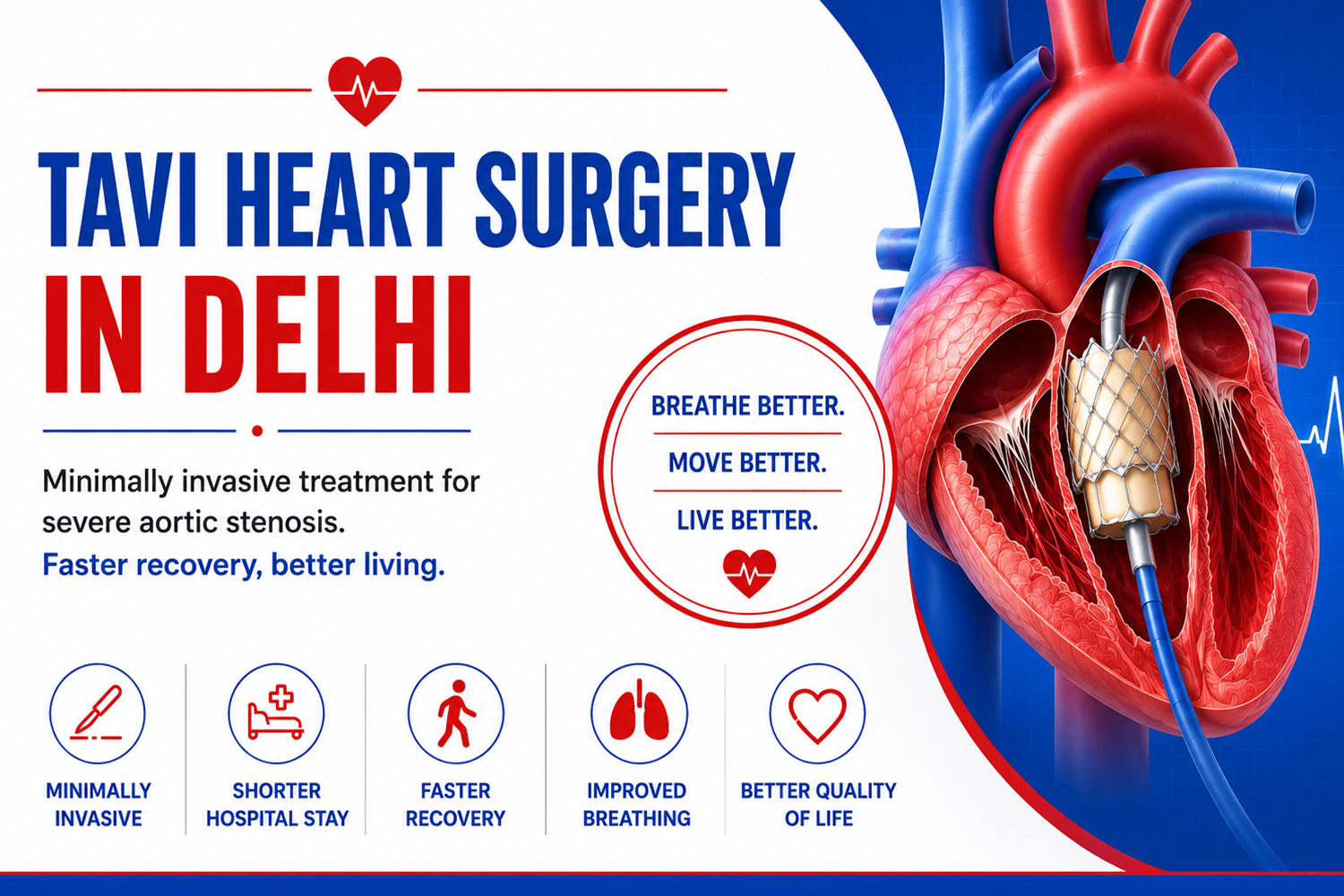
TAVI (Transcatheter Aortic Valve Implantation), also called TAVR, is a minimally invasive procedure used to replace a damaged aortic valve without open-heart surgery.
During the procedure, doctors insert a new artificial valve through a thin catheter, usually via a blood vessel in the groin. The new valve is placed inside the diseased valve and immediately starts functioning.
Compared to conventional surgery, TAVI Heart Surgery in Delhi offers several advantages for eligible patients:
- Smaller incision
- Faster recovery
- Shorter hospital stay
- Less pain and trauma
- Reduced surgical risk in selected patients
When Is TAVI Recommended?
Severe Symptomatic Aortic Stenosis
TAVI is mainly recommended for patients who have:
- Severe narrowing of the aortic valve
- Symptoms affecting daily life
Once symptoms such as breathlessness, chest pain, or fainting begin, treatment should not be delayed.
Patients at High Surgical Risk
Some patients may not tolerate traditional open-heart surgery well due to:
- Advanced age
- Weak heart function
- Kidney disease
- Lung disease
- Frailty
- Previous heart surgery
In such situations, doctors may recommend TAVI Heart Surgery in Delhi because it is less invasive and generally safer for high-risk individuals.
Intermediate and Low-Risk Patients
Initially, TAVI was reserved mainly for elderly or high-risk patients. However, advances in cardiology have expanded its use.
Today, many patients with intermediate or even low surgical risk may also be suitable candidates for TAVI after careful evaluation by a heart team.
Patients With Previous Heart Surgery
Patients who have undergone bypass surgery or previous valve procedures may face higher risks with repeat open-heart surgery.
For such individuals, TAVI often becomes an excellent alternative because it avoids reopening the chest.
Elderly Patients Seeking Faster Recovery
Many elderly patients prioritise mobility, independence, and quality of life. Because recovery after TAVI is usually quicker than conventional surgery, it is often preferred in suitable older adults.
Situations Where TAVI May Not Be Suitable
Although highly beneficial, TAVI may not be ideal for everyone.
Doctors may avoid TAVI if:
- Valve anatomy is unsuitable
- There is an active infection
- Structural heart abnormalities are present
- Long-term valve durability is a concern in younger patients
In some younger individuals, surgical valve replacement may still be considered the better option.
How Doctors Decide If You Need TAVI
1. Detailed Heart Imaging
Tests such as echocardiography and CT scans help assess:
- Severity of valve narrowing
- Heart pumping function
- Blood vessel anatomy
2. Overall Health Assessment
Doctors carefully evaluate:
- Age
- Kidney function
- Lung health
- Frailty
- Mobility
- Other medical conditions
3. Heart Team Evaluation
A multidisciplinary heart team usually includes:
- Interventional cardiologists
- Cardiac surgeons
- Imaging specialists
- Anaesthetists
Together, they determine whether TAVI Heart Surgery in Delhi is the safest and most beneficial option.
Early Symptoms You Should Never Ignore
Many patients delay treatment because symptoms appear mild initially.
Seek medical evaluation if you notice:
- Shortness of breath during routine activities
- Sudden fatigue
- Dizziness
- Fainting episodes
- Difficulty walking long distances
- Swelling in the feet or legs
Early diagnosis can prevent irreversible heart damage.
Why Timing Matters
Waiting too long for treatment can weaken the heart muscle permanently.
Once heart function declines significantly, recovery may remain incomplete even after valve replacement.
This is why cardiologists often advise timely intervention rather than waiting for symptoms to become severe.
Recovery After TAVI
One of the biggest reasons patients prefer TAVI Heart Surgery in Delhi is the relatively smoother recovery process.
Most patients:
- Sit up within hours
- Start walking within 24 hours
- Return home in a few days
Energy levels and breathing usually improve gradually over the following weeks.
Benefits Patients Often Experience After TAVI
Following successful valve replacement, many patients report:
- Improved breathing
- Better stamina
- Reduced chest discomfort
- Greater mobility
- Improved quality of life
- Better confidence in daily activities
For elderly patients especially, regaining independence can make a remarkable difference.
Emotional Concerns Before TAVI
It is completely normal for patients to feel anxious before the procedure.
Common concerns include:
- Fear of complications
- Anxiety about anaesthesia
- Concerns about recovery
- Fear of hospitalisation
Open discussions with an experienced heart specialist can help patients and families feel more reassured and prepared.
Long-Term Outlook After TAVI
Most patients require:
- Regular follow-up visits
- Periodic echocardiograms
- Lifestyle modifications
- Blood-thinning medication in some cases
Modern TAVI valves have shown excellent long-term outcomes in properly selected patients.
Who Should Consider Discussing TAVI With a Cardiologist?
You should consult a heart specialist if you:
- Are over 65 with unexplained breathlessness
- Have been diagnosed with aortic stenosis
- Experience fainting episodes
- Feel worsening fatigue
- Have been told surgery may be high-risk
Early evaluation helps patients understand all available treatment options.
Common Myths About TAVI
Myth 1: TAVI is only for very elderly patients
Reality: TAVI is increasingly being considered for younger and lower-risk patients as well.
Myth 2: TAVI is experimental
Reality: TAVI is an established and widely performed heart procedure globally.
Myth 3: Recovery is immediate
Reality: Recovery is faster than open-heart surgery but still requires proper follow-up and care.
Conclusion
Severe aortic stenosis can silently reduce quality of life and become life-threatening if left untreated. Fortunately, modern advancements such as TAVI Heart Surgery in Delhi now provide patients with a safer, minimally invasive treatment option that can significantly improve symptoms, mobility, and overall heart function.
The decision to undergo TAVI should always be based on careful medical evaluation, overall health status, and patient-specific needs. According to Dr. Naresh Kumar Goyal, Senior Director & HOD – Interventional Cardiology and Heart Failure, timely diagnosis and the right treatment approach can greatly improve outcomes and help patients return to a more active, healthier life.
If you or a loved one experiences persistent breathlessness, fatigue, chest discomfort, or fainting episodes, seeking timely consultation with an experienced interventional cardiologist can make a life-changing difference.
Frequently Asked Questions About TAVI
1. How long does a TAVI procedure take?
The procedure usually takes around one to two hours. Most patients stay in the hospital for three to five days.
2. Is TAVI painful?
Since TAVI is minimally invasive, discomfort is usually mild compared to traditional open-heart surgery.
3. Can the TAVI valve be replaced again in the future?
In selected cases, another valve can sometimes be placed inside the previous valve depending on patient anatomy and overall condition.
4. Will I need blood thinners after TAVI?
Some patients may require blood-thinning medications for a period after the procedure. Your cardiologist will decide the appropriate treatment plan.
5. Can I travel after TAVI?
Most patients can resume travel after recovery and clearance from their cardiologist.
6. How quickly can I return to normal activities?
Light daily activities may resume within a week, although complete recovery varies between individuals.