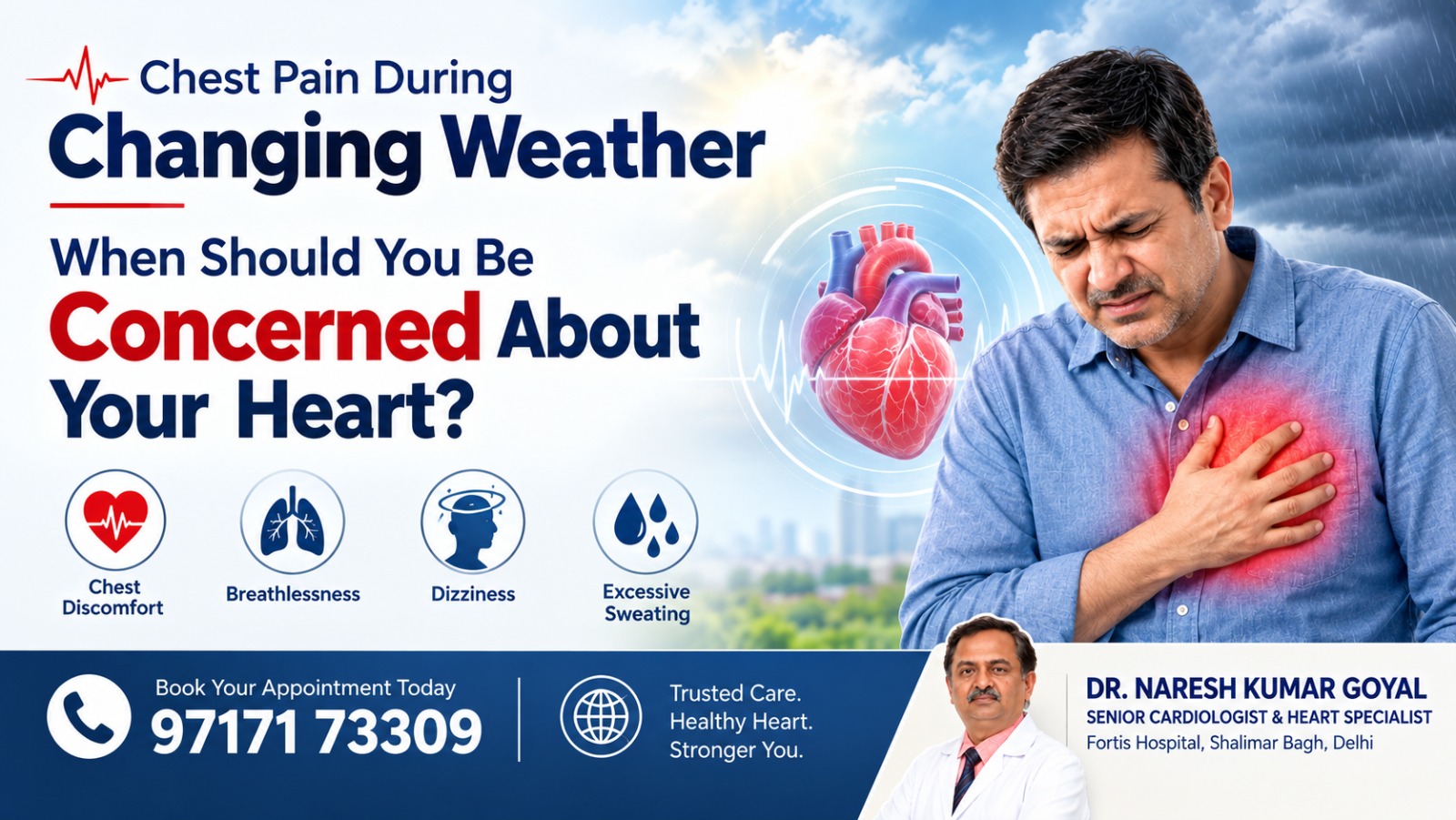
Weather can change quickly. One day may bring heavy rain and humidity, while the next can feel hot and uncomfortable. These sudden environmental and temperature changes can affect the body in different ways, and some people may experience symptoms such as chest discomfort, breathlessness, fatigue, dizziness, or unusual sweating.
But here is something important to remember: chest pain should never be ignored, especially when its cause is unclear.
While chest pain can sometimes be related to acidity, muscle strain, anxiety, or respiratory problems, it may also be associated with a heart condition. Some cardiovascular diseases can develop quietly and may not produce obvious symptoms until the condition becomes serious. This is why heart disease is often described as a “silent killer.”
Why Can Changing Weather Affect Your Heart?
Our body continuously works to maintain a stable temperature. During hot weather, the heart may work harder to circulate blood and regulate body temperature. During colder conditions, blood vessels can constrict, which may increase blood pressure and place additional strain on the cardiovascular system.
Sudden weather changes may also affect people who already have:
- High blood pressure
- Diabetes
- High cholesterol
- Obesity
- Existing heart disease
- A history of smoking
- A family history of cardiovascular disease
This does not mean that every episode of chest pain during changing weather is caused by the heart. However, it does mean that persistent or unexplained symptoms deserve proper medical evaluation.
Chest Pain: How Can You Tell If It May Be Heart-Related?
Chest pain can feel different from person to person. Heart-related discomfort may sometimes be described as:
- Pressure, heaviness, or tightness in the chest
- A squeezing sensation
- Burning or discomfort behind the breastbone
- Pain spreading toward the arm, shoulder, back, neck, or jaw
- Chest discomfort accompanied by shortness of breath
- Unusual sweating
- Nausea or vomiting
- Dizziness or weakness
Some people, particularly older adults and people with diabetes, may experience less typical symptoms.
Do not try to diagnose the cause of chest pain yourself. A healthcare professional can assess your symptoms and decide whether further cardiac testing is required.
Best Heart Specialist in Rohini: When Should You Consider a Consultation?
If you are experiencing recurring chest discomfort, unexplained breathlessness, palpitations, unusual tiredness, or other symptoms that concern you, consulting an experienced cardiac specialist can help identify the underlying cause.
For people searching for the best heart specialist in Rohini, consulting Dr. Naresh Kumar Goyal, MBBS, MD, DM (AIIMS), with more than 25 years of experience, can be an important step toward understanding cardiovascular health and managing potential heart-related risks appropriately.
Rather than waiting for symptoms to become severe, a timely consultation can help determine whether your symptoms are related to the heart or another condition.
What Tests May Be Recommended for Chest Pain?
The exact tests depend on your symptoms, medical history, age, and risk factors. A doctor may recommend investigations such as:
ECG
An electrocardiogram records the electrical activity of the heart and may help identify certain heart rhythm problems or signs of reduced blood supply.
Echocardiography
An echocardiogram uses ultrasound to examine the heart’s structure and function, including how effectively the heart is pumping.
Blood Tests
Certain blood tests can help evaluate cholesterol, blood sugar, and other factors associated with cardiovascular risk. In emergency situations, specific cardiac markers may also be checked.
Stress Testing
In selected patients, a stress test may be recommended to understand how the heart performs when it is working harder.
Other Cardiac Investigations
Depending on the clinical situation, doctors may recommend additional investigations to obtain a clearer picture of the heart and blood vessels.
Can Heart Disease Be Present Without Major Symptoms?
Yes. Some cardiovascular conditions may develop without obvious warning signs. A person may feel generally healthy while risk factors such as high blood pressure, diabetes, high cholesterol, or smoking gradually affect cardiovascular health.
That is why preventive heart care is important, particularly for people with multiple risk factors or a strong family history of heart disease.
Regular health checks can help identify potential problems earlier and provide an opportunity to make appropriate lifestyle or treatment changes.
Don’t Mistake Every Chest Pain for Acidity
Acidity and gas can cause chest discomfort, but assuming that every episode is “just gas” can sometimes be risky.
If chest discomfort is new, severe, persistent, recurrent, or associated with breathlessness, sweating, fainting, nausea, or pain spreading to the arm, back, neck, or jaw, seek urgent medical attention rather than attempting to treat it yourself.
If you think you may be experiencing a heart attack or another medical emergency, contact your local emergency medical service immediately.
How Can You Protect Your Heart During Changing Weather?
A few healthy habits can support cardiovascular health throughout the year:
- Keep blood pressure and blood sugar under control.
- Monitor cholesterol when recommended.
- Stay physically active according to your health condition.
- Eat a balanced diet with appropriate portions.
- Avoid smoking and tobacco.
- Maintain a healthy weight.
- Stay adequately hydrated during hot weather.
- Get sufficient sleep.
- Manage stress.
- Take prescribed medicines regularly.
- Do not ignore recurring or unexplained symptoms.
When Should You See a Heart Specialist?
You should consider medical evaluation if you experience recurring chest discomfort, unexplained breathlessness, frequent palpitations, dizziness, reduced exercise tolerance, unusual fatigue, or swelling in the legs.
People with diabetes, hypertension, high cholesterol, obesity, previous heart problems, or a family history of cardiovascular disease may also benefit from regular cardiovascular assessment.
Your Heart Deserves Attention Before an Emergency
Changing weather can influence how our bodies feel, but chest pain should not automatically be blamed on rain, heat, humidity, or seasonal changes. The underlying cause needs to be understood.
Heart disease can sometimes progress silently, which makes awareness, preventive check-ups, and timely medical consultation especially important.
If you are searching for the best heart specialist in Rohini, Dr. Naresh Kumar Goyal (MBBS, MD, DM from AIIMS) brings 25+ years of experience in cardiovascular care. A professional evaluation can help you understand your symptoms, assess your risk factors, and determine the appropriate next steps for your heart health.
Listen to your body. Don’t ignore persistent chest pain. Early evaluation can make a meaningful difference.